January
Southern Plains
Herds spread across Ndutu and Kusini. The first calves are born.
Where to stay →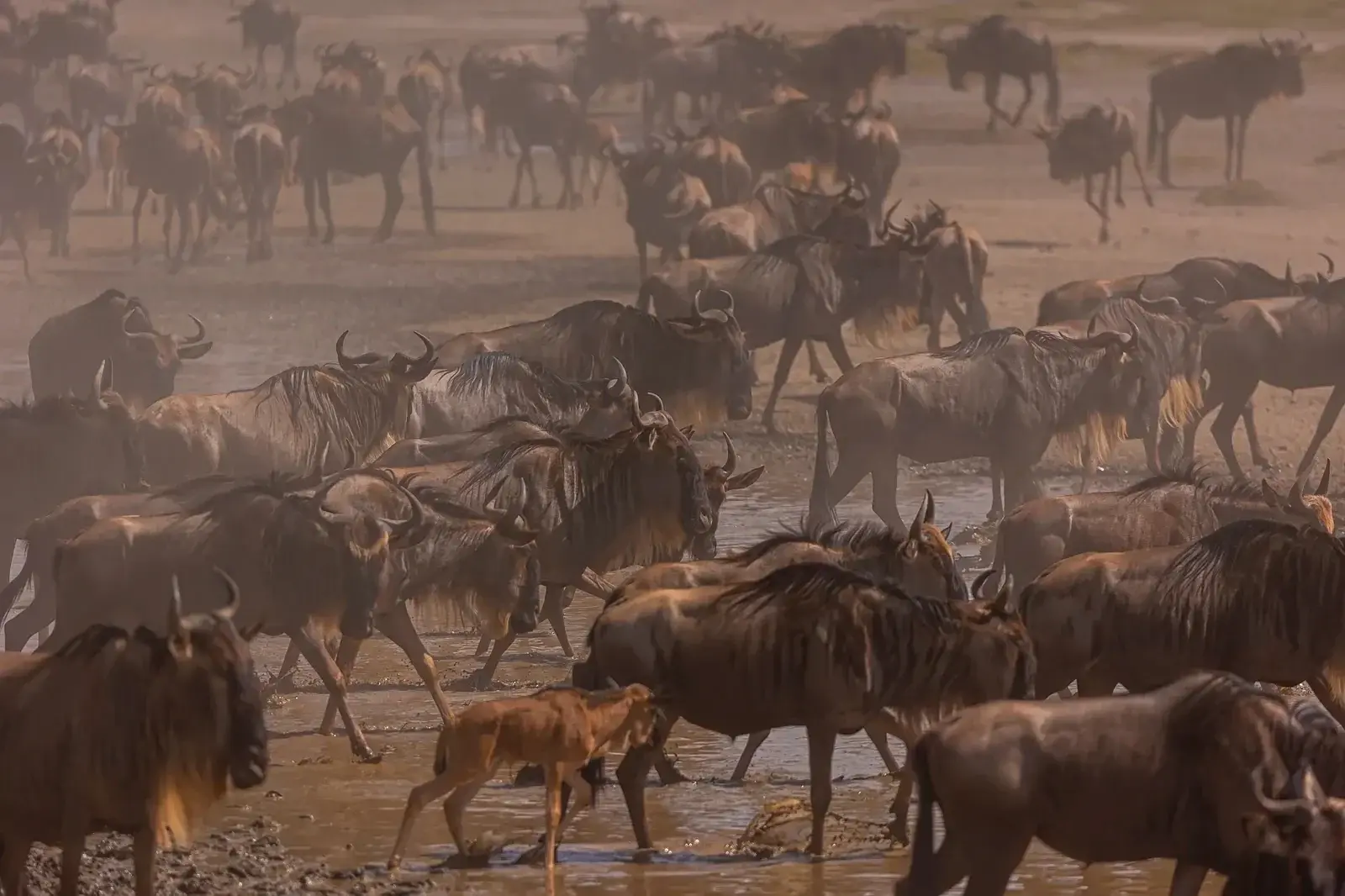
02°20′S 34°50′E Serengeti · 365 Days
It Never Crosses the Same Place Twice
On the move 2 million Animals, one loop
Ask a Migration Specialist20+ Years Following the Herds · Local Expertise · Personal Planning
How does the Serengeti migration work?
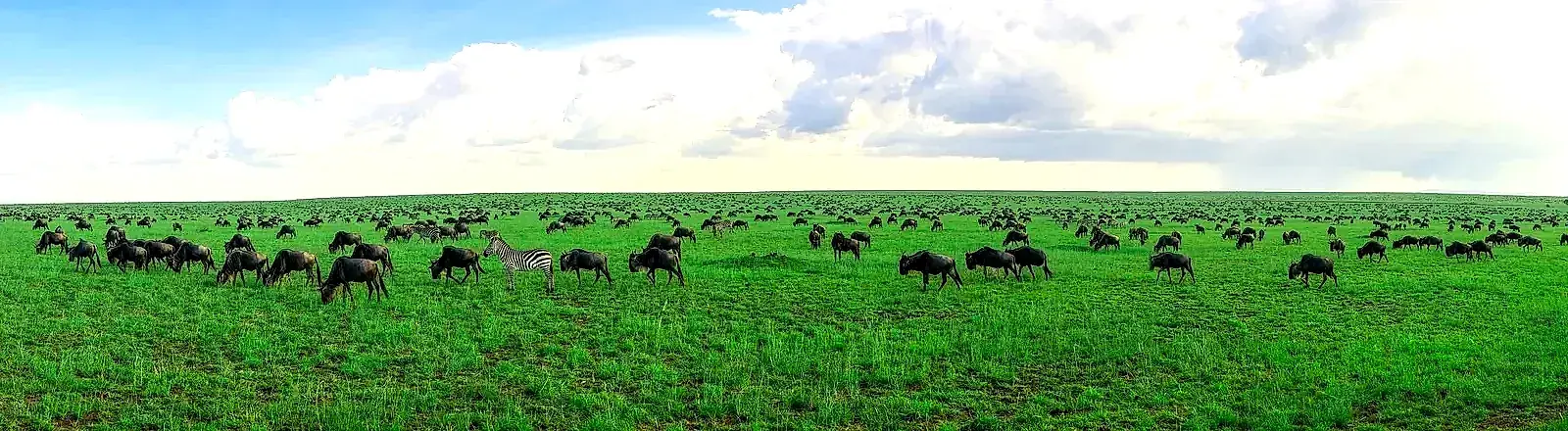
The Serengeti migration is a year-round, clockwise loop of over 1.5 million wildebeest, with zebras and gazelles, following the rain to fresh grass. From about December to March they graze and give birth on the short-grass plains of Ndutu and the southern Serengeti. From April to June they move north-west through the central Serengeti and Western Corridor, crossing the Grumeti River. From July to October they reach the northern Serengeti and cross the Mara River, some moving into Kenya's Maasai Mara, before heading south again with the short rains in November. Timing shifts every year with the rain.
Read the herds
Two million animals. One migration. It never crosses the same place twice. The herds follow the rain, not a calendar, so the map changes every year.
This guide explains how the migration really works: why the herds move, where they usually are each month, how crossings happen and where to base yourself.
When you are ready, we use what our guides see on the ground, season after season, to build your safari around exactly where the herds are likely to be.
The Serengeti migration
The herds follow the rain. We follow the herds. You arrive where the action is.
Why they move
Wildebeest need fresh grass every day. They follow the rains across the ecosystem, moving on as each area dries out.
The short grass of the southern plains grows on volcanic soils rich in minerals, ideal for mothers and newborn calves. That is why calving happens there.
In the dry season, the north has the Mara River and greener grass, so the herds move there until the rains return.
The loop
| Months | Area | Key places | What is happening |
|---|---|---|---|
| December to March | Southern Serengeti | Ndutu, Kusini, Lake Masek | Grazing and calving; predators everywhere |
| April to May | Central Serengeti | Moru Kopjes, Seronera | Long columns moving north-west; the rut begins |
| June to early July | Western Corridor | Grumeti River, Kirawira | Grumeti crossings and giant crocodiles |
| July to October | Northern Serengeti | Kogatende, Lamai, Mara River | Mara River crossings back and forth |
| November | Eastern and central | Lobo, Loliondo, Seronera | Herds return south with the short rains |
This is the usual pattern. Early or late rains can move everything by several weeks, and the herds often split into groups in different areas.
Month by month
January
Herds spread across Ndutu and Kusini. The first calves are born.
Where to stay →February
Thousands of calves a day in Ndutu, with lions, cheetahs and hyenas close behind.
Where to stay →March
Calves grow strong; herds bunch up on the southern plains as rain patterns change.
Where to stay →April
Long rains. Herds head towards Moru Kopjes and the central Serengeti.
Where to stay →May
Columns stretch for kilometres through the centre and west; males fight for mates.
Where to stay →June
Herds reach the Western Corridor and cross the Grumeti River past giant crocodiles.
Where to stay →July
First herds reach Kogatende and Lamai. The first Mara River crossings begin.
Where to stay →August
Herds cross the Mara River again and again, in both directions.
Where to stay →September
Herds move between the northern Serengeti and the Maasai Mara.
Where to stay →October
Last crossings in the north as the first rains approach.
Where to stay →November
Short rains pull the herds south through Lobo and the eastern Serengeti.
Where to stay →December
Herds return to Ndutu and the southern plains, ready for calving.
Where to stay →River crossings explained
1 · Gathering
Thousands of wildebeest gather on the bank, nervous of crocodiles and steep drops.
Plan for crossings →2 · Waiting
They may approach and turn back many times. Patience is everything.
Plan for crossings →3 · The leap
When one animal leaps, the rest pour into the river in a rush of dust and water.
Plan for crossings →4 · The river
Crocodiles wait in the water and predators on the far bank. Many cross; some do not.
Plan for crossings →No one can guarantee a crossing. A private vehicle lets you wait as long as it takes. Our guides follow park rules: vehicles stay back from the banks so the herds can cross freely.
Where to stay
| Months | Best base | Nearest airstrip | Good to know |
|---|---|---|---|
| December to March | Ndutu and southern Serengeti | Ndutu | Close to the Ngorongoro Crater |
| April to May | Central Serengeti | Seronera | Green season; some camps close |
| June to early July | Western Corridor | Grumeti or Kirawira | Quieter than the north |
| July to October | Northern Serengeti | Kogatende | Best for Mara crossings |
| November | Lobo and central Serengeti | Lobo or Seronera | Herds on the move, few vehicles |
Mobile camps move with the herds through the year. We place you in the right camp for your dates.
Tanzania or Kenya?
| Serengeti (Tanzania) | Maasai Mara (Kenya) | |
|---|---|---|
| Herds present | Most of the year | Part of the dry season, roughly July to October |
| Calving | Yes, December to March | No |
| River crossings | Grumeti and Mara Rivers | Mara River |
| Size | Much larger area | Smaller, busier reserve |
| Crowds at crossings | Usually fewer vehicles | Often many vehicles |
From our guides
Stay at least three or four nights in the right area. Herds and crossings need patience.
Choose camps that can reach several areas, so your guide can follow the herds day by day.
A 100–400 mm lens and a bean bag are ideal. Dust and fast action reward a quick shutter.
Ready to go?
Safaris
Private safaris for every month, timed to the herds.
View migration safaris →Destination
Big cats, endless plains and the migration.
Explore the Serengeti →Calving
The calving grounds, December to March.
Explore Ndutu →Timing
Park by park and month by month.
Read the guide →Questions travellers ask
It depends on the month and the rain. Usually: southern Serengeti December to March, central and western Serengeti April to June, northern Serengeti July to October, heading south in November. Message us for the latest update from our guides.
To follow the rain to fresh grass and water. The mineral-rich southern plains are ideal for calving, and the Mara River area has water in the dry season.
Over 1.5 million wildebeest, plus hundreds of thousands of zebras and gazelles, close to two million animals.
Usually July to October, with the most in August and September, in the northern Serengeti around Kogatende and Lamai.
December to March in Ndutu and the southern Serengeti, peaking in February.
Yes, roughly a clockwise loop between the southern Serengeti and the Maasai Mara, but it changes every year and the herds often split up.
The herds spend most of the year in Tanzania, including calving and the Grumeti crossings. Kenya hosts them for part of the dry season. Northern Serengeti crossings usually have fewer vehicles.
At least three or four nights in the right area of the Serengeti, within a safari of five to ten days.
Begin your journey
Tell us your dates. A migration specialist replies with where the herds should be and a private proposal within 24 hours.
Ready When You Are
Tell us your dates and interests — we'll shape a private itinerary suited to you, from the first game drive to the last sundowner.
Request a Quote